Trees and development
-
Arboricultural Feasibility Studies
Early arboricultural advice can protect your layout, programme and profit.
Our Arboricultural Feasibility Studies provide a clear assessment of how existing trees will influence development potential before detailed design or planning submission. We identify tree quality, statutory protection (TPOs / Conservation Areas), Root Protection Areas and realistic retention or removal options — giving you a practical understanding of site constraints from the outset.
This early-stage input helps to:
Maximise developable area
Avoid costly redesigns
Reduce planning risk
Inform land value and plot yield assessments
Support confident pre-application discussions
With experience working within local authority and private consultancy roles, we provide commercially aware advice grounded in how planning departments assess tree impacts in practice.
Clear, pragmatic and design-led — helping you move forward with certainty.
-
A BS5837 Tree Survey is required where trees may influence a proposed development. It forms the foundation of the planning submission and informs layout design from the outset.
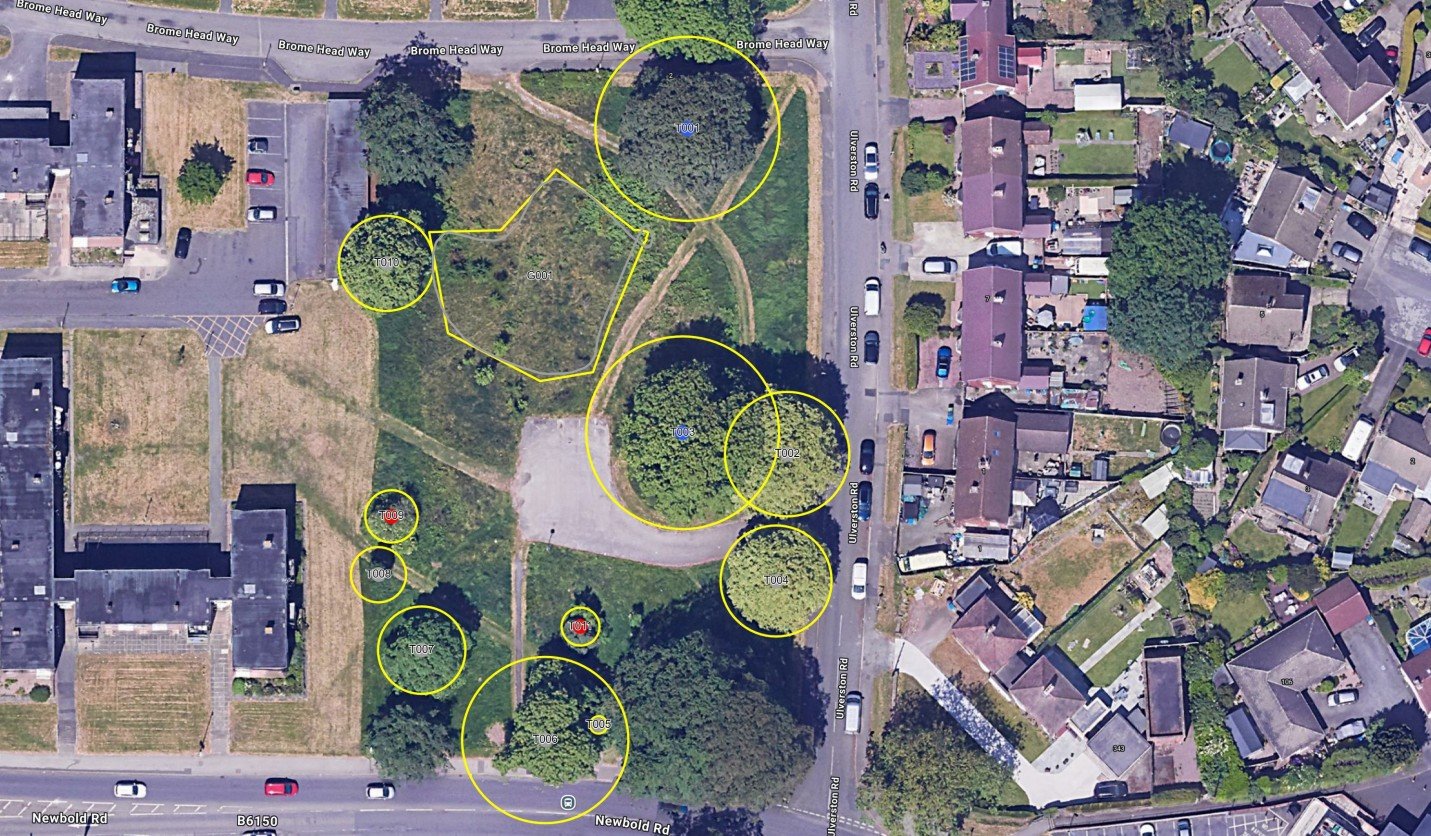
Undertaken in accordance with BS5837, the survey categorises trees by quality (A, B, C or U), identifies Root Protection Areas (RPAs), and produces a Tree Constraints Plan to guide site layout.
This enables you to:
Design with a clear understanding of tree constraints
Identify realistic retention and removal options
Reduce planning risk and delays
Support efficient pre-application discussions
Avoid costly redesign at later stages
With experience working both within local authority and private consultancy roles, our reports are practical, policy-aware and aligned with how planning officers assess tree impacts in reality.
Clear advice. Defensible reports. Design-led solutions.
-
Getting a good understanding of the material tree constraints on site, both above and below ground, will enable the planning application to succeed.
We inform the developer of where best to build around trees, to ultimately achieve planning success.
Our mapping systems create a clean, easy to understand constraints plan.
-
An Arboricultural Impact Assessment evaluates how a proposed development will affect retained trees and outlines the measures required to ensure their successful protection.
Prepared in accordance with BS5837, the AIA assesses direct and indirect impacts including:
Proposed tree removals
Encroachment into Root Protection Areas (RPAs)
Canopy clearance requirements
Level changes and site access
Demolition and construction effects
Where impacts are identified, we set out practical mitigation measures and construction solutions, forming the basis of the Arboricultural Method Statement where required.
The AIA provides planning officers with a clear, defensible explanation of how trees have influenced the design and how retained trees will be safeguarded — reducing objections, delays and redesign.
Pragmatic advice, policy-aware reporting, and solutions that support deliverable development.
-
An Arboricultural Method Statement sets out the practical measures required to responsibly safeguard retained trees during demolition and construction. It is typically required to discharge planning conditions prior to works commencing on site.
Prepared in accordance with BS5837:2012, the AMS details site-specific protection measures including:
Protective fencing and ground protection
Construction within or adjacent to Root Protection Areas
Special engineering solutions where required
Supervision and monitoring requirements
With over a decade of hands-on arboricultural and site experience, we provide realistic, buildable solutions that align with construction programmes while satisfying local authority requirements.
Clear, practical documentation — giving you the best possible chance of smoothly discharging planning conditions and progressing to site without delay.